Impact · September 2024 · Policy Synth, Your Priorities
Unlocking Literacy: How Can AI Help Close the Reading Gap?
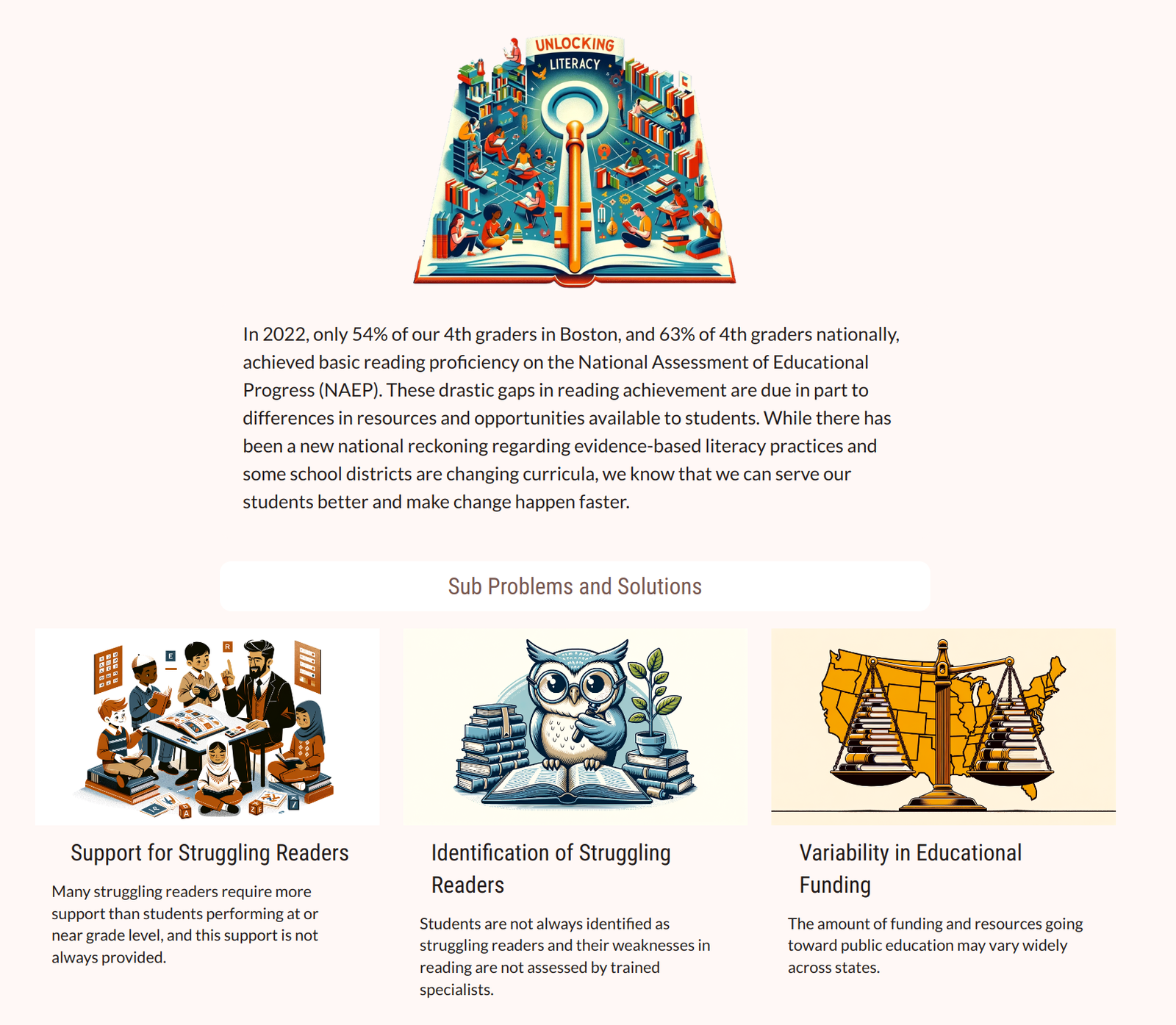
In 2022, only 54% of 4th graders in Boston — and 63% nationally — achieved basic reading proficiency on the National Assessment of Educational Progress (NAEP). These gaps stem in part from differences in resources and opportunities available to students, and despite a national reckoning around evidence-based literacy practices, change has been slow.
The "Unlocking Literacy" project set out to make it faster. Led by the AI4Impact program at Northeastern University's Burnes Center for Social Change together with the Museum of Science, Boston Public Schools and The GovLab, the project used Citizens Foundation's Your Priorities platform and Policy Synth agents to engage the populations most affected by literacy inequities and to understand why proficient reading has proved so difficult to achieve at scale.
Mapping the problem, evolving the solutions
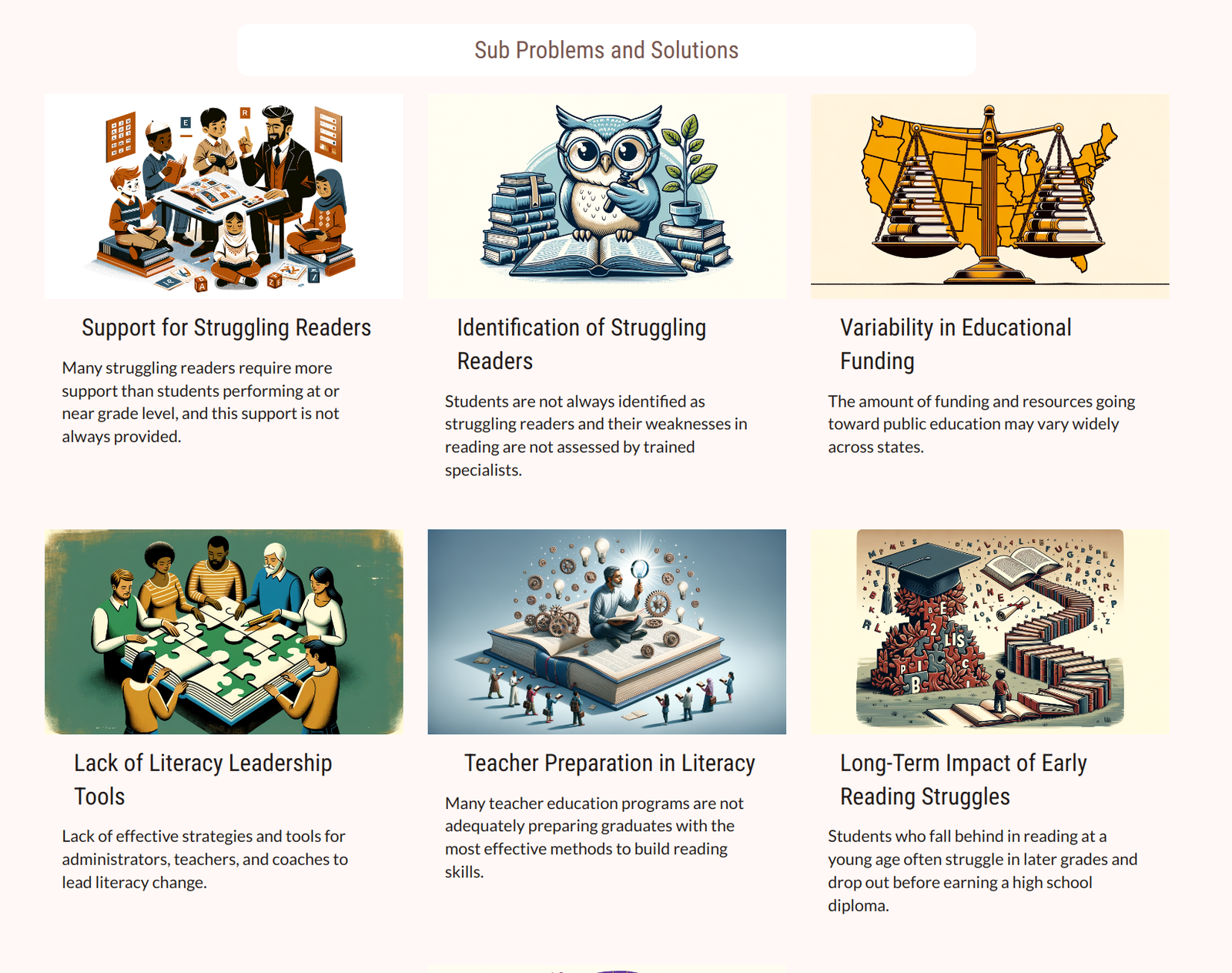
Policy Synth agents first decomposed the reading gap into its component problems — support and identification of struggling readers, variability in educational funding, literacy leadership tools, teacher preparation, the long-term impact of early reading struggles, phonics instruction — each grounded in research with cited sources.
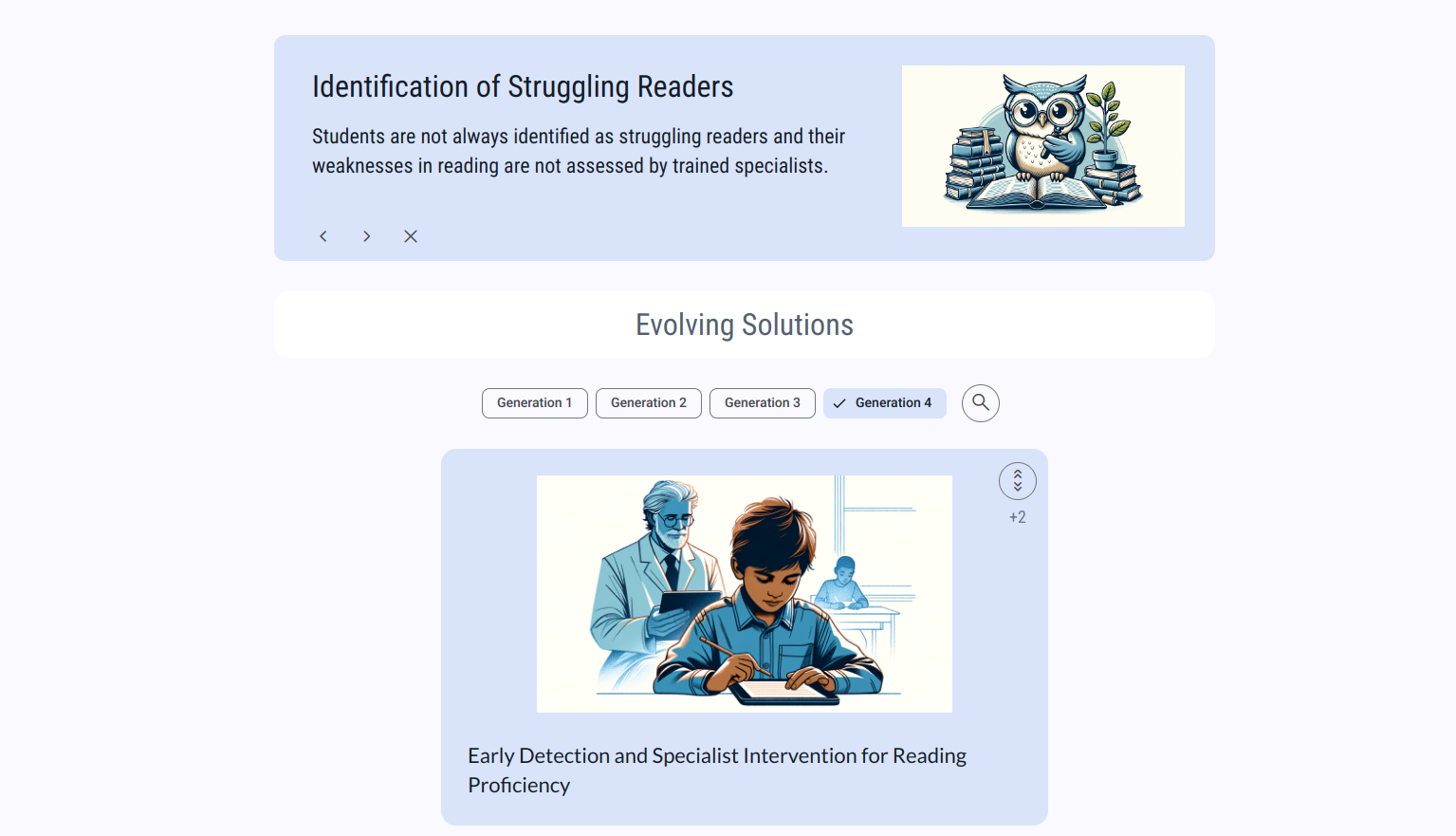
For every sub-problem, solution populations were then evolved over multiple generations: generated from web research, reviewed, pairwise-ranked and refined, with full pros-and-cons analyses and evolutionary trees showing how each surviving idea developed. Top-rated solutions, like combining early-detection digital literacy assessment with certified reading-intervention specialists, came with the evidence and the trade-offs laid out for educators and community members to judge — putting an AI-accelerated research capability in the hands of the people working to close the gap.