Blog · December 31, 2024 · Artificial Intelligence, Collective Intelligence, Digital Democracy
People Decide: How AI Can Help Governments Use Public Input
In 2008, Iceland did not only face a banking crisis. It faced a crisis of trust. People had plenty to say about what should change, but the old channels were too slow, too narrow, and too far away from the decisions shaping everyday life.
Citizens Foundation was born from that gap.
The first answer was not artificial intelligence. It was a better way for people to think together. With Better Reykjavík, residents could propose ideas, add clear arguments for and against them, prioritize what mattered, and give the city a structured signal it could actually use. What began as an experiment became part of how Reykjavík listens, sets agendas, and funds local improvements. Over time, tens of thousands of residents took part, and hundreds of citizen ideas became real projects in neighborhoods across the city.
That oldest story still explains our work today. The point was never just participation for its own sake. The point was better decisions.
Public institutions often ask for input, but input alone is not enough. A consultation can collect thousands of comments and still leave decision-makers with the same hard questions: What are people really saying? Which ideas have broad support? What are the strongest arguments on each side? What trade-offs are involved? What evidence should shape the final decision?
This is where collective intelligence matters. A crowd is not wise just because it is large. It becomes useful when people can contribute ideas, compare options, deliberate civilly, and prioritize what should happen next. For more than fifteen years, Citizens Foundation has built open-source tools around that principle: people surface ideas, communities weigh them, and public officials get clearer signals for action.
Artificial intelligence does not change that principle. It extends it.
In a 2022 Democracy Technologies interview, Róbert Bjarnason described the foundation's origins in the collapse of public trust after Iceland's financial crisis, and the need to build channels between citizens and government so communities could make better decisions together. A later interview on Your Priorities pointed to the next step: bringing citizens and AI together in a decentralized way, so people are supported when they develop proposals instead of being replaced by a central algorithm.
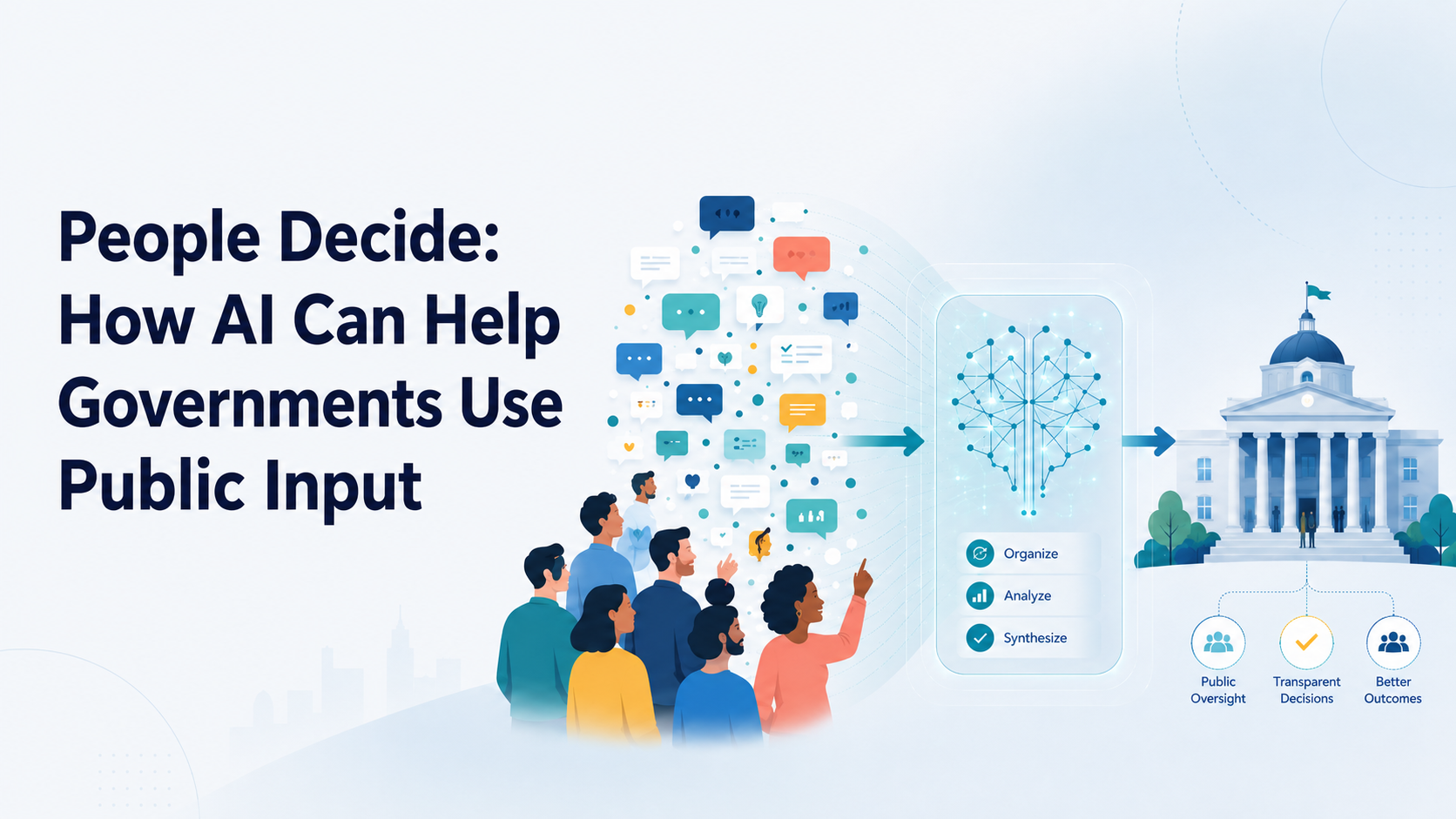
That is the key distinction. AI should not speak for citizens. It should help more citizens speak clearly, and help institutions understand what they are hearing.
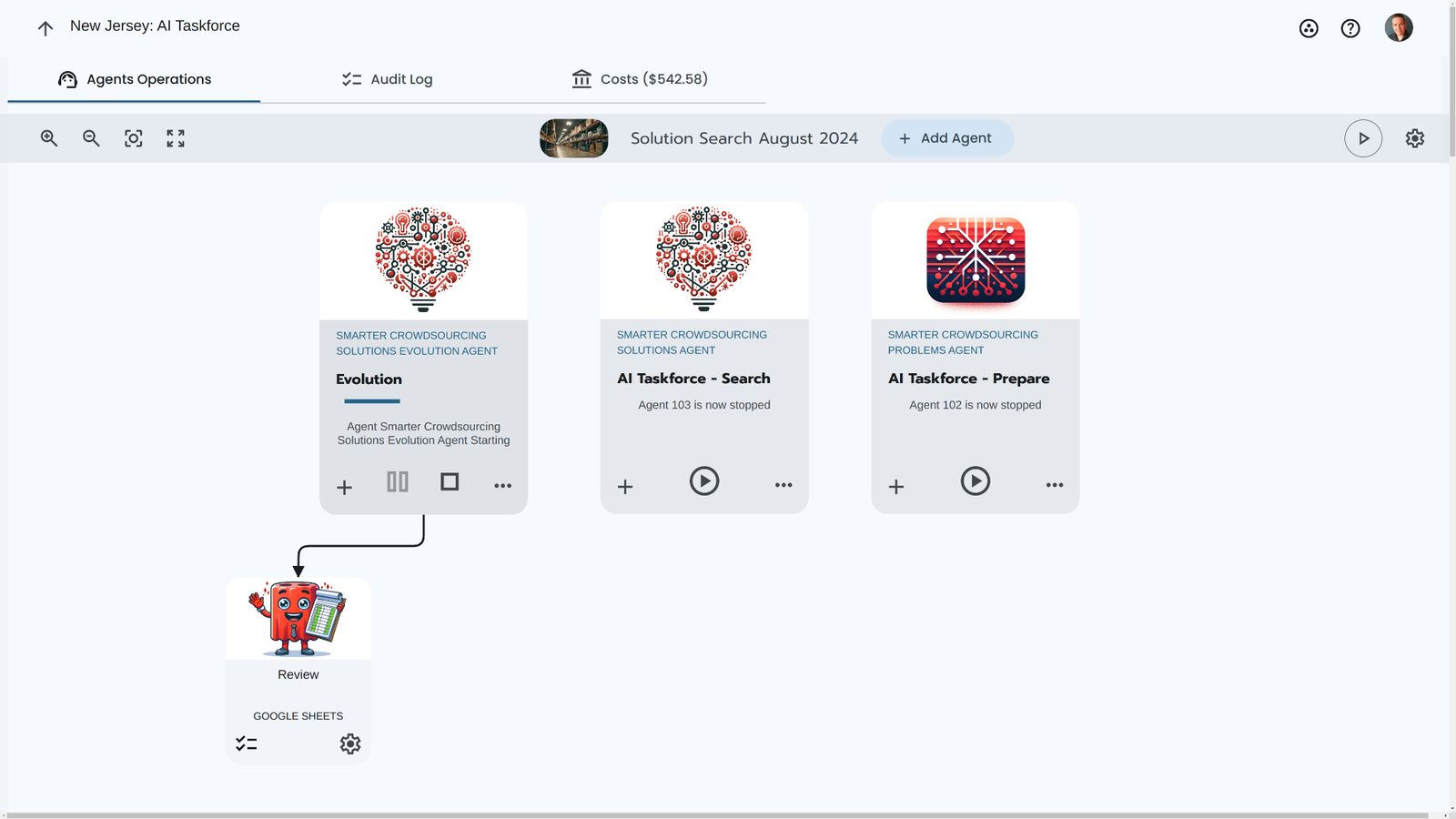
With Policy Synth, AI agents can do work that used to consume months of staff time: search across large bodies of evidence, map root causes, cluster thousands of contributions, draft candidate solutions, compare trade-offs, and prepare material for human review. The 2024 paper Using Artificial Intelligence to Accelerate Collective Intelligence, written by Róbert Bjarnason, Dane Gambrell, and Joshua Lanthier-Welch, describes this as a human-centered model where AI enhances collective intelligence rather than replacing it.
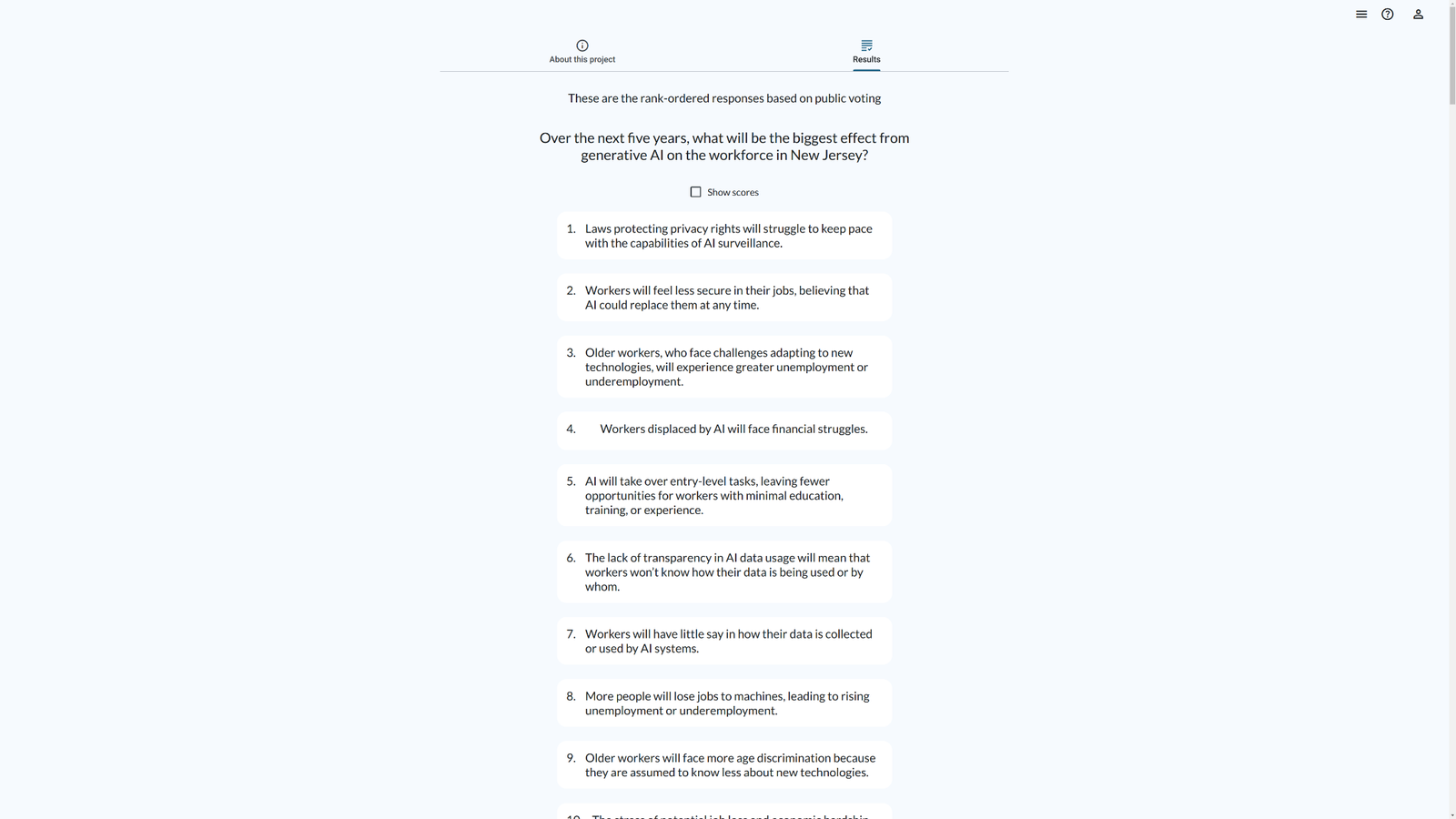
The New Jersey AI Task Force shows what this looks like in practice. In 2024, more than 2,200 workers used All Our Ideas to rank concerns about generative AI and work. Those public priorities then flowed into Policy Synth, where AI agents helped research root causes and evolve evidence-based policy options. The process did not ask AI to decide what New Jersey should do. It used AI to make the public signal easier to understand and the policy work easier to evaluate. As the case study puts it: AI accelerated the work; people decided.
External coverage has noticed this shift. In Fast Company, Beth Simone Noveck described Policy Synth as a way to increase the speed and scale of smarter crowdsourcing, while also warning against substituting machines for real human input. The principle is simple: technology can inform, but people decide.
This is the real opportunity for democratic AI. Not chatbots that speak on behalf of citizens. Not black-box systems that make public choices invisible. The opportunity is to give governments, communities, and civil society better tools for listening, reasoning, and acting together.
The oldest Citizens Foundation story and the newest Policy Synth work are therefore the same story. In 2010, the challenge was helping a city hear its citizens clearly enough to act. Today, the challenge is helping institutions make sense of much larger, faster, and more complex public input without losing human judgment.
Better public decisions require both: collective intelligence from people, and artificial intelligence that remains accountable to them.