Blog · June 13, 2026 · Artificial Intelligence, Policy Synth, Economic Opportunity
AI for Skills-First Hiring: Removing Barriers Hidden in Public-Sector Rules
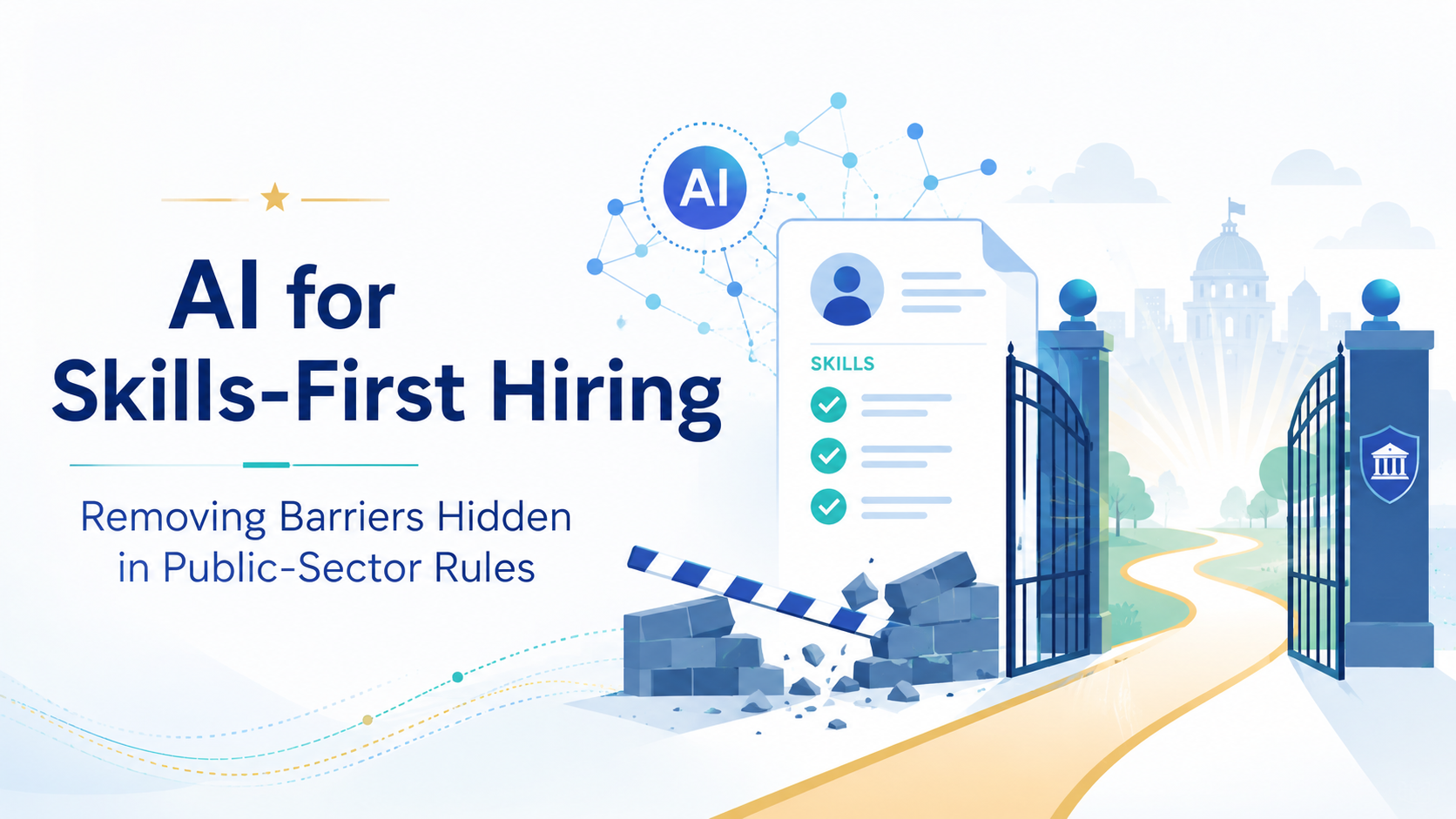
The last story in this series showed how Policy Synth can help turn public input into policy proposals. This one shows the next step: using AI to help governments implement change inside the rules, job descriptions, and legal language that shape real decisions.
The skills-first hiring project is led by Northeastern University's Burnes Center for Social Change. Citizens Foundation has partnered with the Burnes Center from the start, helping co-fund and develop the Policy Synth work behind it. The goal is practical: help states find and remove unnecessary degree requirements that block qualified workers from public-sector jobs.
The project is led by Seth Harris, Distinguished Professor of Practice at Northeastern University and Senior Fellow at the Burnes Center. Harris brings deep labor and workforce policy experience, including service as Acting U.S. Secretary of Labor and Deputy U.S. Secretary of Labor. Under his leadership, the project focuses on a concrete problem: many government hiring barriers are not only in policy statements. They are hidden across thousands of job descriptions, civil-service rules, statutes, regulations, and licensing requirements.
That is where Policy Synth becomes useful.
The Barrier Is Often in the Details
Skills-first hiring starts from a simple idea: public employers should focus on the skills needed to do the job, not default to college degree requirements when a degree is not necessary. That matters because unnecessary degree requirements exclude many capable workers, especially people from lower-income backgrounds and communities that have had less access to higher education.
But changing the policy is only the first step. A governor, agency, or civil service commission can commit to skills-first hiring and still run into hundreds of buried constraints. A job posting may say a degree is required. A classification rule may imply it. A licensing requirement may be relevant for some roles but not others. A statute may appear to create a barrier, but only after legal review can the state know whether it actually does.
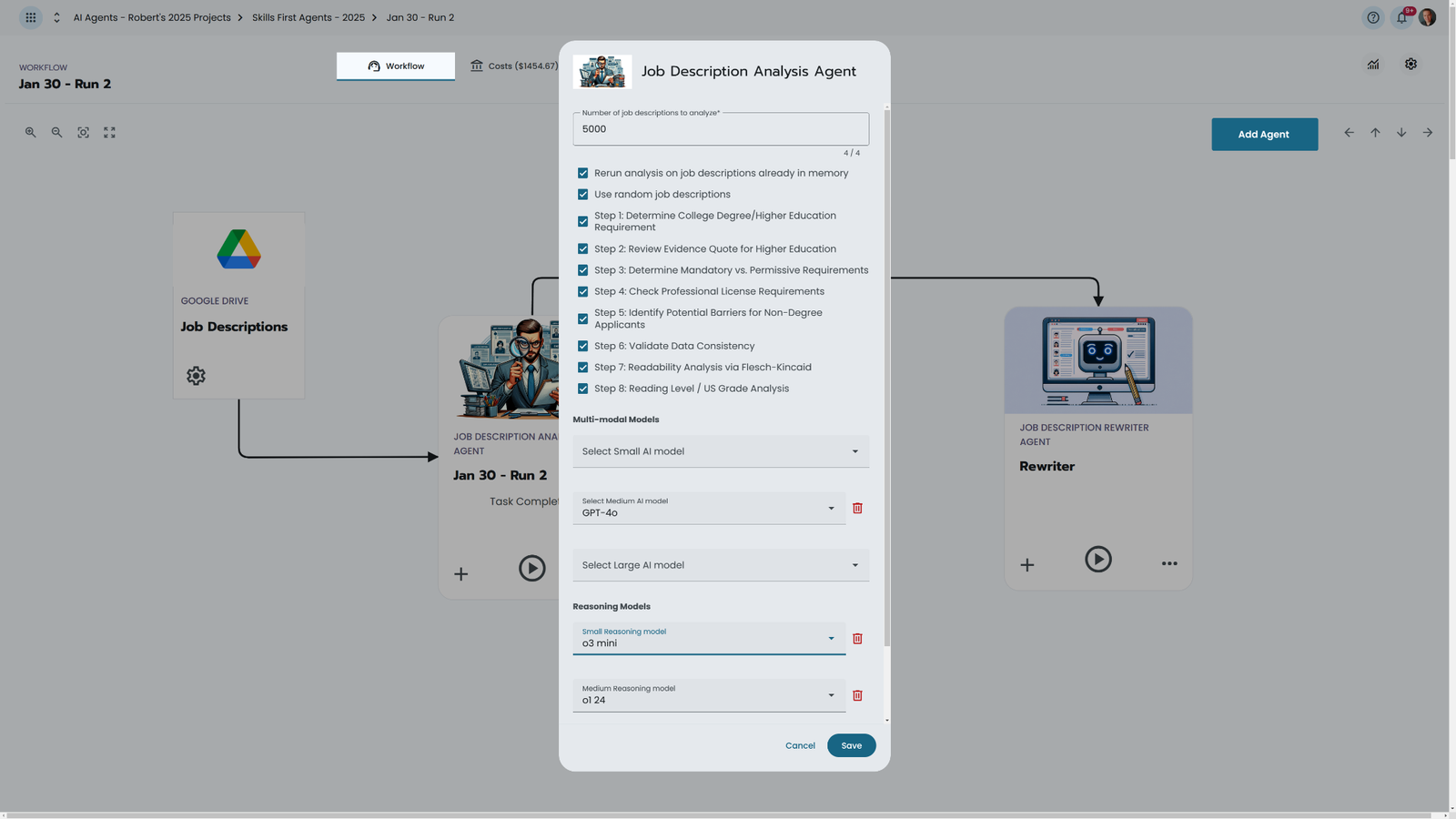
The Burnes Center's skills-first workforce hiring initiative addresses that implementation problem directly. Working with New Jersey's Civil Service Commission, the project uses Policy Synth to analyze more than 3,000 job descriptions for readability, degree requirements, and legal barriers to skills-based hiring.
Reading Thousands of Job Descriptions
Policy Synth agents help review job descriptions at a scale that would be difficult for a human team to sustain manually. The system identifies whether a posting requires a college degree, quotes the relevant evidence, distinguishes mandatory language from softer preferences, checks for professional license requirements, and flags barriers that may exclude otherwise qualified applicants without degrees.
That analysis is not the end of the process. It creates structured evidence for human review.
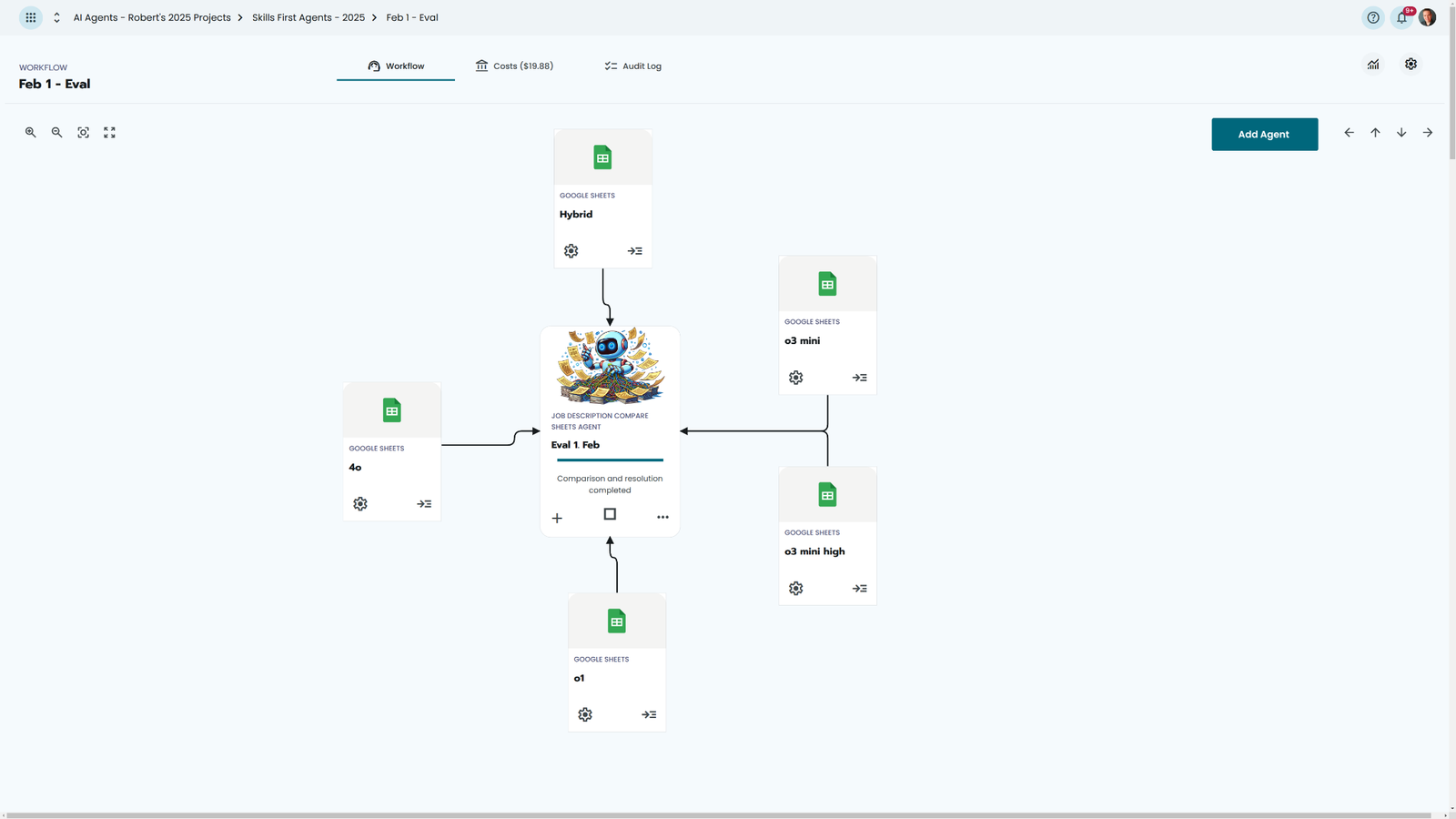
A companion rewriter agent then drafts skills-first versions of problematic job descriptions. The aim is not to let AI decide who should be hired. The aim is to help public servants see where old language may be creating unnecessary barriers, and to give them practical alternatives they can evaluate and improve.
This distinction matters. In high-stakes public systems, AI should not replace institutional responsibility. Used well, it can reduce the amount of repetitive review work and give experts more time to make informed judgments.
Looking Behind the Job Posting
The project also looks beyond job descriptions. Some hiring barriers are embedded in laws, regulations, classification systems, and agency rules. Policy Synth's barriers research agents scan those materials in stages, moving from possible barriers to likely barriers to confirmed barriers for human evaluation.
That workflow reflects the same principle Citizens Foundation has used across Better Reykjavik, Your Priorities, All Our Ideas, and Policy Synth: better decisions need structured input, transparent reasoning, and tools that help people work through complexity.
In the New Jersey AI workforce story, public input helped prioritize worker concerns. In the skills-first hiring project, AI helps implementation teams inspect the machinery of government itself: the words, requirements, and rules that determine who gets access to opportunity.
From Partnership to Scaling
Citizens Foundation has been involved in this project from the beginning as a partner of Northeastern University, co-funding early development and building the Policy Synth technology used in the work.
In January 2025, the Burnes Center project received a $250,000 GitLab Foundation AI for Economic Opportunity Fund grant. Citizens Foundation received part of that support as the technical development partner. The project was later presented at OpenAI in July 2025, helping show how AI can be used for practical, public-interest implementation work.
In 2026, GitLab Foundation announced additional scaling support for six prior grantees, including the Burnes Center's work on reforming state hiring systems. Citizens Foundation received a $500,000 follow-up grant to continue developing and scaling the Policy Synth work.
The funding matters because this is not a demo problem. It is implementation infrastructure. If the model works in one state, it can be adapted across other public-sector hiring systems where the same hidden barriers exist.
AI as Decision Infrastructure
For Citizens Foundation, this project is a clear example of the kind of AI work that belongs in democratic systems. It is not AI as a shortcut around people. It is AI as decision infrastructure: helping institutions find evidence, expose trade-offs, draft better options, and move from intention to action.
Skills-first hiring is ultimately about access. It asks whether public jobs are open to people with the ability to do the work, or whether outdated rules quietly filter them out before they ever get a fair chance.
Policy Synth helps make those barriers visible.
That is where AI can have real public value. Not by making the decision for government, but by helping government see the decision more clearly.